Cultural Festivals in Rajasthan Every Traveler Should See
Rajasthan is a land that celebrates with gusto. Throughout the year, this desert state comes alive with festivals that showcase its rich cultural heritage, from intimate village rituals to grand celebrations that draw visitors from around the world. Timing your visit to coincide with one of these festivals transforms a trip from memorable to truly unforgettable.
Jaisalmer Desert Festival: A Celebration on the Dunes
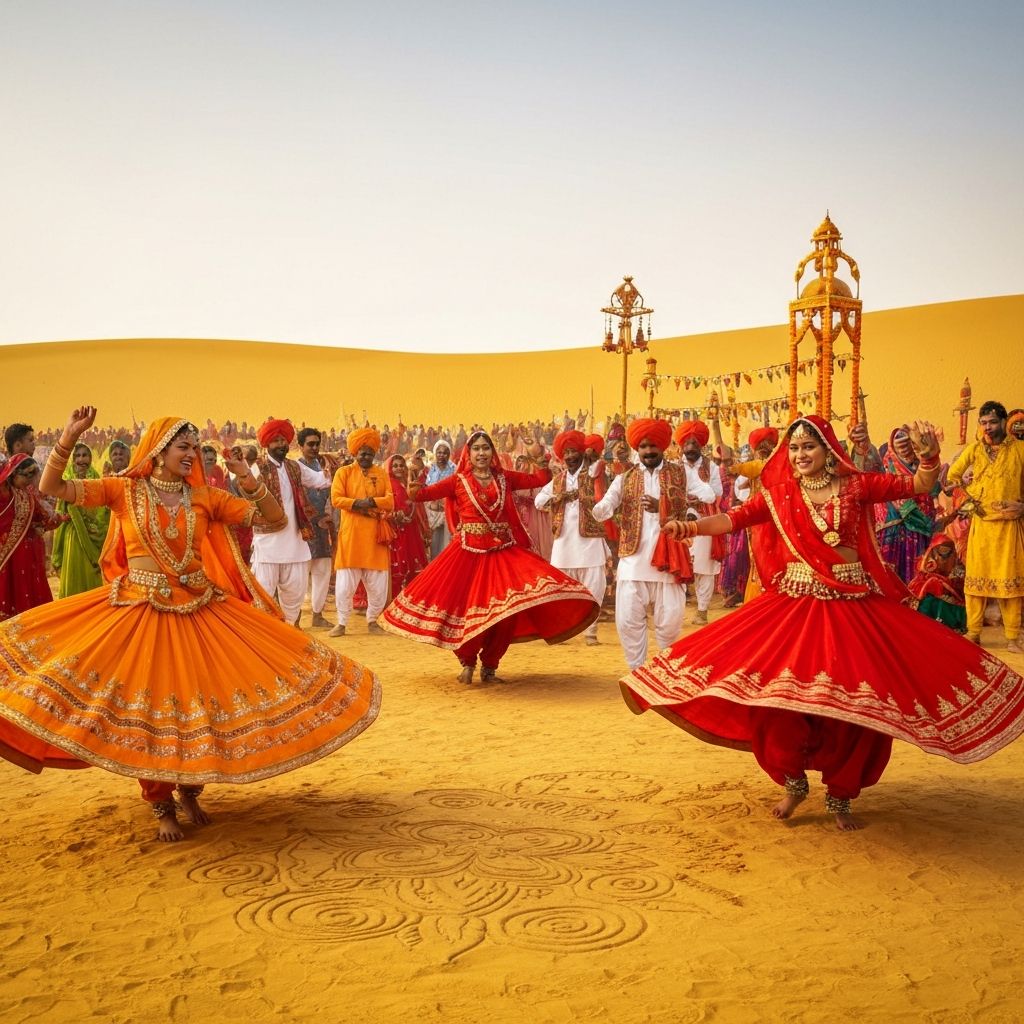
Held each February during the full moon, the Jaisalmer Desert Festival is perhaps the most visually spectacular cultural event in Rajasthan. Against the backdrop of the golden fort and endless sand dunes, three days of music, dance, and competitions unfold in a celebration that captures the essence of desert culture.
The festival kicks off with a procession through the narrow lanes of Jaisalmer Fort, where decorated camels and folk performers in dazzling costumes wind their way to the event grounds. Traditional competitions include camel races, turban-tying contests, and the famous Mr. Desert competition, where local men vie for the title based on their impressive mustaches and traditional attire.
As night falls, the festival moves to the Sam Sand Dunes outside the city. Folk musicians perform against the moonlit desert, while bonfires illuminate dancers whose silhouettes spin against the star-filled sky. Camping overnight in the dunes during the festival is an experience that stays with travelers forever.
Pushkar Camel Fair: The World's Largest Camel Gathering
The Pushkar Camel Fair needs little introduction. Held during the full moon of Kartik month in November, this legendary gathering brings together over 50,000 camels and hundreds of thousands of traders, pilgrims, and tourists for a week of commerce, spirituality, and cultural celebration.
What sets Pushkar apart from other festivals is its combination of sacred and secular. Pilgrims come to bathe in the holy lake and worship at the Brahma Temple, while traders conduct business that has been transacted the same way for centuries. In between, cultural programs, competitions, and carnival attractions create an atmosphere of joyful chaos.
The fair evolves over its duration. The early days focus on livestock trading, while the final days see more cultural events as the religious significance of the full moon approaches. Staying for the entire duration allows you to experience all facets of this unique celebration.
Mewar Festival: Udaipur's Colorful Welcome to Spring
Held in March or April to coincide with Gangaur, the Mewar Festival celebrates the arrival of spring in the City of Lakes. Unlike the larger desert festivals, Mewar retains an intimate quality that makes it feel more like a local celebration that happens to welcome visitors.
The highlight is a magnificent procession where women in traditional attire carry images of Goddess Parvati through the winding streets of Udaipur. The procession ends at Gangaur Ghat on Lake Pichola, where the images are ceremonially immersed in the water as thousands of floating lamps transform the lake into a sea of light.
Cultural performances throughout the festival showcase the distinctive arts of Mewar region. Ghoomar dance, where women in brilliant skirts spin in hypnotic circles, is a particular highlight. The setting of Udaipur, with its romantic lakes and historic palaces, adds an incomparable backdrop to the festivities.
Teej: Celebrating the Monsoon and Marriage
Teej is celebrated throughout Rajasthan in July and August, welcoming the monsoon rains that bring relief from the scorching summer. The festival holds special significance for women, who dress in their finest green attire and gather to sing traditional songs, swing on elaborately decorated swings, and honor the goddess Parvati.
Jaipur's Teej procession is particularly grand, featuring a silver palanquin carrying the goddess through the old city streets accompanied by elephants, camels, dancers, and musicians. The bazaars overflow with women shopping for bangles, mehendi, and sweets, creating a festive atmosphere throughout the city.
For travelers, Teej offers a chance to witness women's traditions that are often invisible to outsiders. Many families welcome visitors to join their celebrations, providing intimate access to rituals and customs that have been passed down through generations of Rajasthani women.
Nagaur Fair: Rajasthan's Second Largest Cattle Fair
Held each January in the town of Nagaur between Jodhpur and Bikaner, this cattle fair may be lesser known than Pushkar but offers a more authentic experience with far fewer tourists. Over 70,000 cattle, horses, and camels change hands during the week-long event.
The Nagaur Fair retains a rawness that larger events have lost. Trading is serious business here, and the sight of thousands of red-chili farmers spreading their wares across acres of ground is unforgettable. Camel and bullock cart races add excitement, while folk performers entertain crowds that remain largely local.
Accommodation is limited in Nagaur, which helps keep visitor numbers down. Those who make the effort are rewarded with a glimpse into rural Rajasthani life that more famous destinations can no longer offer.
Holi in Rajasthan: Colors Across the Desert State
While Holi is celebrated throughout India, Rajasthan offers unique variations that make experiencing it here particularly special. Jaipur and Udaipur host some of the most vibrant public celebrations, with tourists welcomed into the colorful chaos.
In the village of Barsana near Mathura, the unique Lathmar Holi sees women playfully beat men with sticks in a reversal of traditional gender roles. Throughout Rajasthan, the evening before Holi sees bonfires lit in every neighborhood, where communities gather to burn effigies of the demon Holika and mark the triumph of good over evil.
The safest way to experience Holi as a tourist is through organized hotel events, though adventurous travelers who join street celebrations return with stories, stained clothes, and memories that last a lifetime. Wear old clothes that can be discarded, protect cameras carefully, and be prepared to get thoroughly colorful.
Planning Your Festival Visit
Festival dates in Rajasthan follow the lunar calendar and change each year, so confirm exact dates before planning your trip. Accommodation fills up quickly during major festivals, particularly in smaller towns like Pushkar and Jaisalmer. Booking months in advance is essential for popular events.
Dress modestly and respectfully, especially at festivals with religious significance. Asking permission before photographing individuals is not just polite but often leads to more authentic interactions and better photos. Learning a few words of Hindi or Marwari opens doors that remain closed to those who do not make the effort.
Consider hiring a local guide who can explain the significance of what you are witnessing and help navigate the chaos of major events. The investment is worthwhile for the depth of understanding it provides.
The Soul of Rajasthan
Festivals reveal the soul of a place in ways that monuments and museums cannot. They show how people live, what they value, and how they express joy and devotion. In Rajasthan, where tradition runs deep and celebration is an art form, attending a festival is to glimpse the living heart of this magnificent land.
Whether you witness thousands of camels gathering on desert sands, women in brilliant green welcoming the monsoon, or communities coming together to throw colors at strangers turned friends, you will leave with an understanding of Rajasthan that no guidebook can provide. These are the moments that transform travel into something deeper: not just seeing a place, but feeling it.